
Los Angeles County Resident Lookup Coverage
No single office keeps a public Los Angeles County residents directory, so the hunt runs through many doors. Each source confirms something narrow. The Assessor ties an address to a parcel. RR/CC links a named party to a recorded instrument. A court index names a litigant or defendant, while a vital index points to a life event. A voter check verifies facts you already hold. Business filings, licenses, probate files, and unclaimed property add affiliation and family clues along the way.
| Record | What It Confirms | Where to Search | Access |
|---|---|---|---|
| Parcel and assessment | AIN, situs, legal and physical facts | Los Angeles County Assessor | Free portal; owner display limited |
| Recorded deed | Grantor, grantee, legal transfer | RR/CC Recorder | Name/year request; copy charges |
| Court index | Party, case type, date, place | Los Angeles Superior Court | Paid party search; case summary free |
| Vital index or copy | Event, date, county, family clue | LAPL, RR/CC, CDPH | Index and certificate rules differ |
| License or business filing | Public affiliation and status | California DCA or SOS | Free public index |
| Probate or unclaimed property | Heir or owner-name lead | LASC or State Controller | Case or claim proof required |
Pick the Los Angeles County source that matches the clue in hand. A full name plus a case type points to the courts. An address points to the Assessor. A family event suggests vital records or probate. A business name leads to state filings. A voter check only works when all four input facts are already known, so it confirms rather than discovers.
Los Angeles County Same-Name Residents
Same-name discipline comes first in any Los Angeles County resident lookup. Build a comparison grid as you go. Track full and variant spellings, middle initials, approximate age or event date, community, AIN or address, related names, occupation, license, court location, and source date. Two matching names are rarely two matching people. A deed proves a property transaction. A case proves a party role. A license proves professional standing. Yet none of them alone proves where someone lives now.
Vary the surname in a Los Angeles County resident lookup. Include diacritics. Make no assumptions about anyone's background. Tie a business address to a parcel only when the record itself supports the link. An obituary or probate notice works as a family lead. Confirm the event through a vital index, a newspaper, a cemetery source, or a court file before you rely on it.
- Identity anchor
- A detail that links a name to a place or event, such as an AIN, case courthouse, spouse, or date.
- Index
- A finding aid that may omit the full record image or confidential fields.
- Custodian
- The office, court, library, or archive that holds and can correct the record.
Assessor Clues for Los Angeles County Residents
A known Los Angeles County address gives the resident lookup its most stable anchor. The Assessor Portal offers Basic, Legal, and Map Search modes. Those modes can return an AIN, situs, legal description, use code, values, tax-rate area, year built, square footage, and map context. Owner names may be suppressed from public view online. A mailing address is not a situs. An assessor card lists no household roster at all.
Use the AIN and legal description to cross-check a deed. It also helps with a planning case or a map. Tracing an earlier owner works the same way. The AIN converts a modern address into a grantor and grantee request at RR/CC. When you need to verify one current person, parcel evidence never substitutes for a court, vital, or voter source.
Los Angeles County Court Party Lookup
The Los Angeles County Superior Court civil index sells a party-name search. It covers unlimited civil, probate, family law, limited civil, and small-claims matters. Coverage starts in 1983 for unlimited civil, probate, and family law. Limited civil begins in 1991, and small claims in 1992. Criminal defendant searches run on a separate route. Older matters require an Archives inquiry or a courthouse visit.
A party-name search can return the litigant, case type, and number. It also gives the filing date, location, and an image count. The fee is charged before results appear and is nonrefundable on a no-match. Courthouse public-access computers sometimes show reviewable material that the web does not. Sealing and confidentiality rules still apply. Federal cases live in PACER, not the county index.
The official LASC name-index route displays the party-search screen. It shows the input fields and case-type menu.
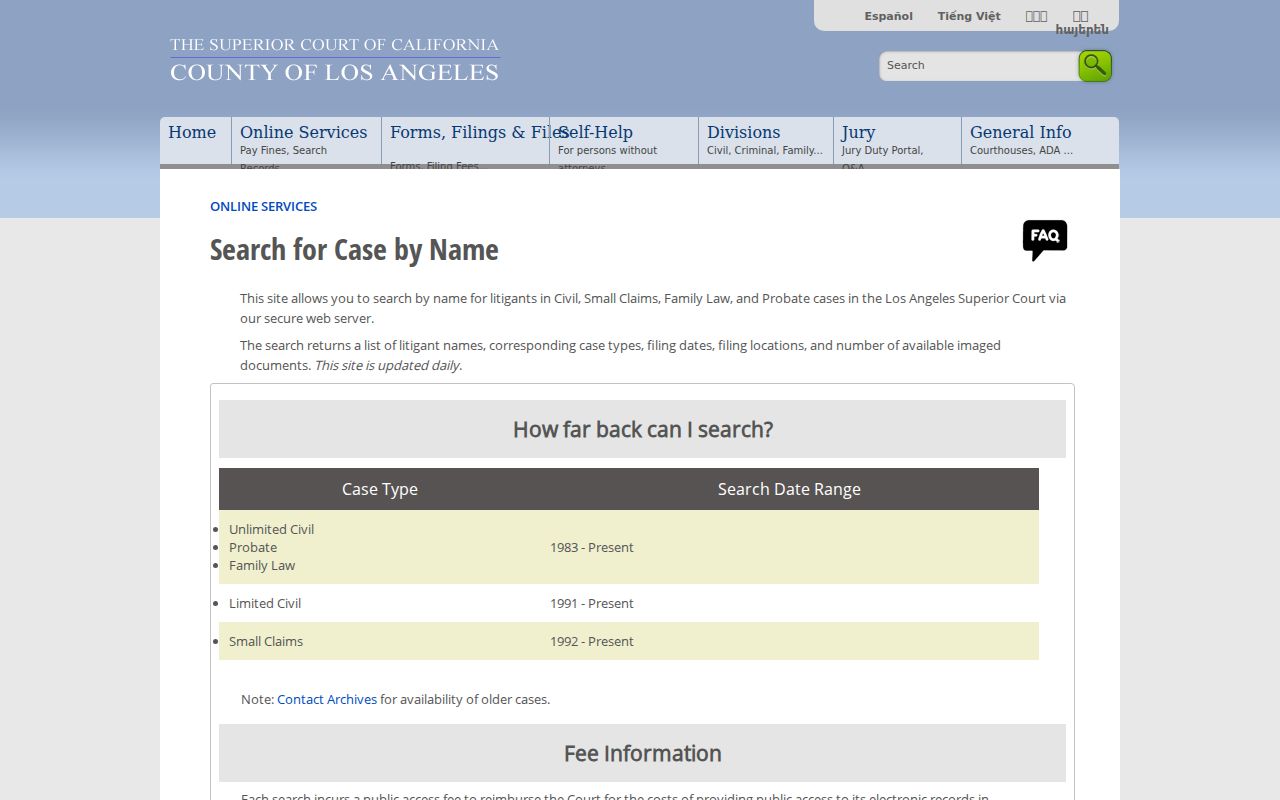
Check case geography, party role, and filing date before accepting a same-name hit.
Los Angeles County Resident Court Fields
The Los Angeles County court route uses exact fields that tame a common name. It serves both individuals and companies, on separate paths. Criminal searching offers Exact Match or Starts With options. Payment happens before the result, with Visa, MasterCard, Discover, or debit listed in the court FAQ, and purchased images and guest results keep separate availability windows.
| Search Type | Individual or party; company route; criminal route has its own match choices. |
|---|---|
| Last Name | Required for an individual; spelling matters. |
| First Name | Supported field that narrows a common surname. |
| Middle Name or Initial | Optional discriminator when shown in the source. |
| Company Name | Alternative organization-party field. |
| Date range and case type | Optional route-dependent filters for civil, family, probate, or small claims. |
| Payment and account | Account or guest checkout before the search result. |
The court's fee and coverage explanation is shown in the LASC public-access FAQ.
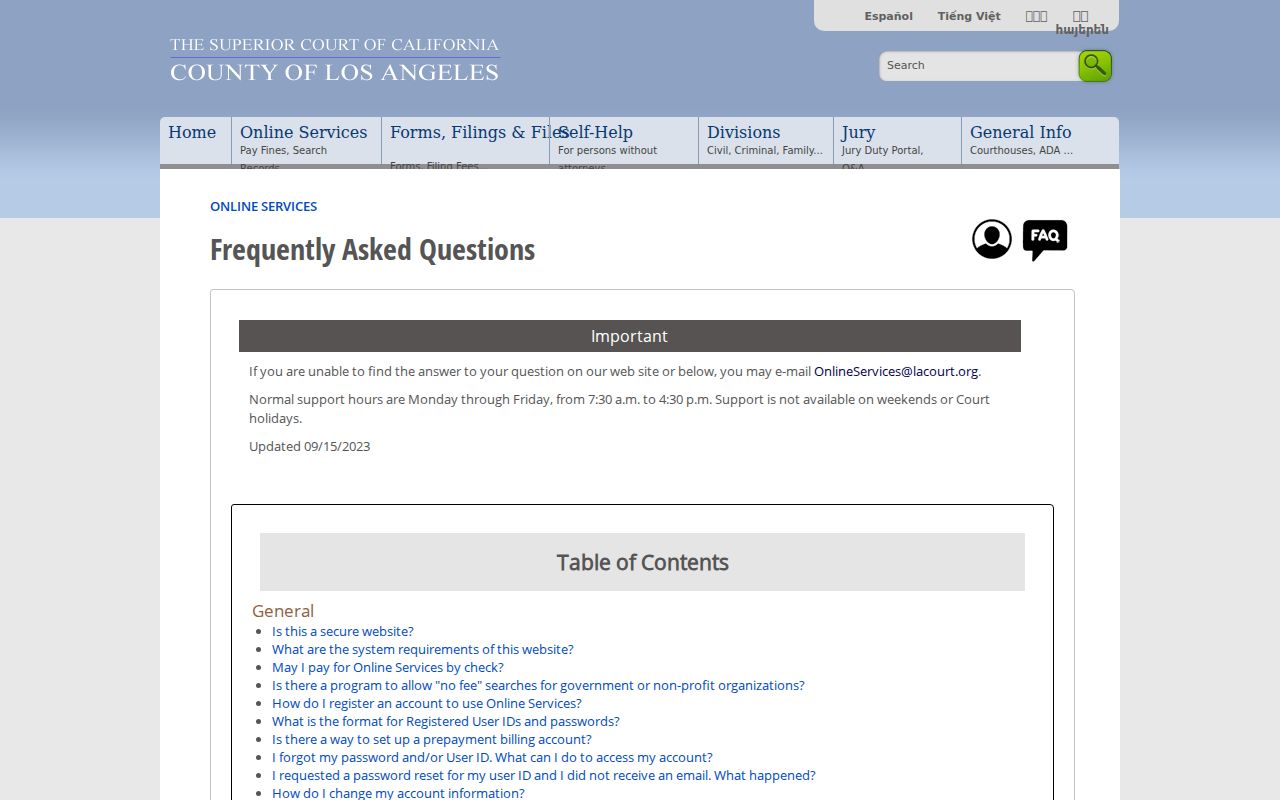
A result can show the case number, filing courthouse, case type, party roles, events, hearings, disposition fields, image count, and a download link where eligible. Sealed material, juvenile and adoption records, paternity matters, and cases involving minors may be unavailable.
Vital Clues for Los Angeles County Residents
Vital records in Los Angeles County travel two routes. The county recorder, RR/CC, holds births dating to 1866 along with county death and marriage records. CDPH issues statewide. The LAPL indexes add historical leads, including the California Death Index covering 1905 through 1994 and the California Marriage Index from 1949 through 1986. For a certified copy, you need the issuing custodian and the correct eligibility category.
Informational birth and death copies reach a wider public. They carry the identity-invalid legend. Authorized copies demand a statutory relationship plus a sworn Certificate of Identity. Confidential marriages require statutory eligibility or a court order. Adoption records stay confidential, so a birth-parent search belongs in California's authorized adoption-information channels, never a public name box.
Keep an index separate from a certificate. A name, event date, county, spouse, or parent clue from an index does not establish identity the way a certified record does. Order forms and statewide instructions come from California CDPH Vital Records.
Los Angeles County Voter Resident Check
The Los Angeles County voter page checks facts you already hold. It does not uncover facts you want to discover. Feed it a last name, birthdate, residence house number, and ZIP. It confirms registration status for that one person. It cannot browse a street or reveal ballot choices. A street-wide list of Los Angeles County residents is simply not what it offers.
Elections Code sections 2180 through 2194 restrict voter-file access. The allowed purposes are electoral, scholarly, journalistic, political, or governmental. A separate file request may cover residence and mailing address, registration date, precinct, district, party preference, status, or participation history. Release depends on what the law allows. Protected identifiers and signatures stay excluded.
Los Angeles County Probate Heir Lookup
Probate answers a family-history question that a standard resident lookup cannot. A petition, notice, or case event can name a decedent, petitioner, heir, or relative. It can also carry a notice address. The LASC probate name index sits inside the paid party search. Online coverage runs from 1983 forward. Before tying a notice to a living person, check the decedent, the dates, and the case geography. Then confirm the stated relationship.
Heir research follows a loop. Start with a death or obituary lead. Move to probate. Then circle back to vital records, a cemetery, newspapers, or family-history sources. Confidential, sealed, juvenile, and protected items may be withheld. A probate address is an estate or notice clue. It is not proof of where anyone lives now.
Los Angeles County Resident Affiliations
State business and license indexes work well as identity separators. The California Secretary of State's bizfile searches by entity name or file number. Returns can include status, jurisdiction, and filing date. Principal and mailing addresses may appear too. Agent for service, reported officers or managers, and filing PDFs can round out the entry. DCA's Basic Search accepts board, license type, and license number. It also takes business name, first name, last name, and registry number. Results vary by board.
Use a business record to corroborate a name, a place, or a date. It is affiliation evidence, not proof of residence. A business or agent address tells you where filings went, not where a person sleeps. County fictitious-business-name filings and municipal registrations can supplement the state index. Each has its own custodian and scope.
Los Angeles County Federal Case Lookup
Federal cases in the Central District of California run through PACER. Search the PACER Case Locator by party. Then open the district docket. What you gain is federal parties, filings, docket events, and dates to weigh against other records. Per-page charges and quarterly waivers change, and PACER's official fee page governs them, so a resident lookup should never hard-code an amount. Access runs through the official PACER records system.
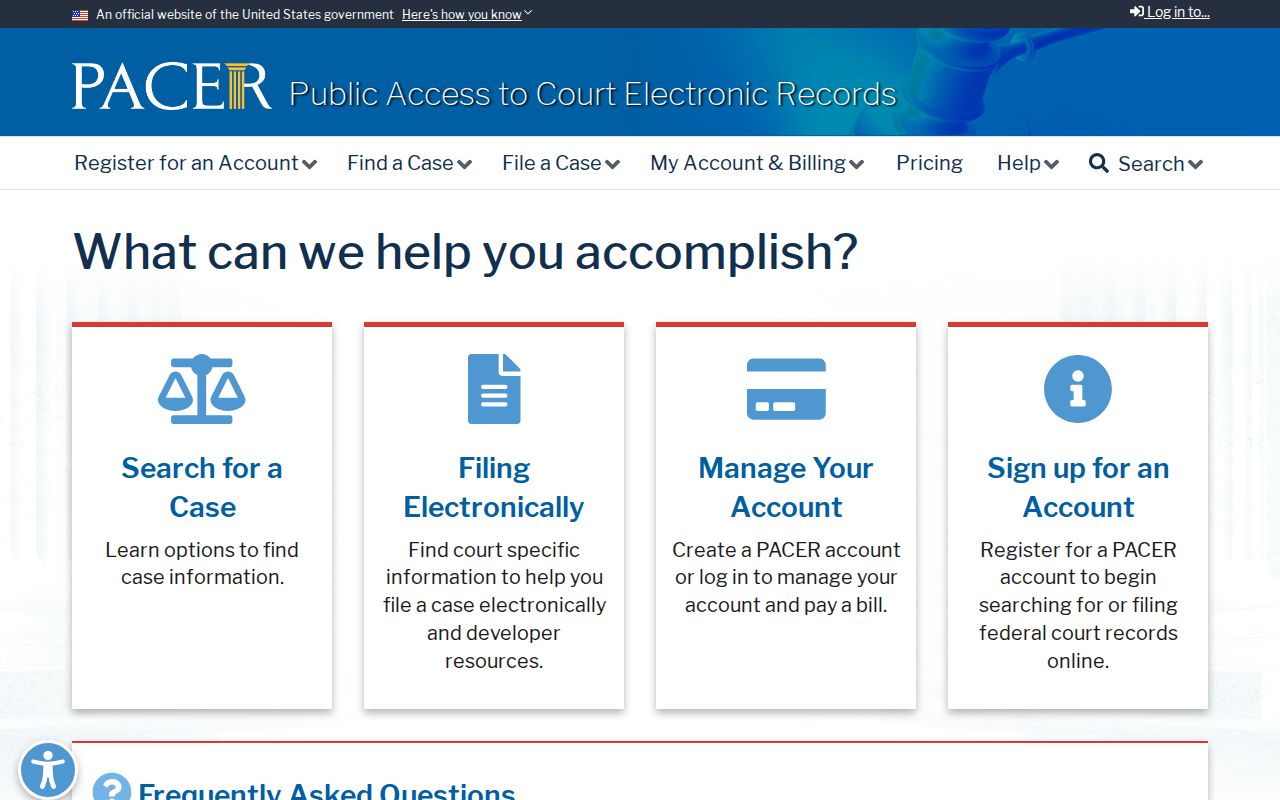
A federal docket is still just one identity clue. It is neither a county property record nor proof of where someone lives now.
Verifying a Los Angeles County Resident
Verification means matching records created for different reasons. A clean sequence starts with a known name or address. It ends at the custodian's own record, with notes on what each source can and cannot prove.
- Anchor the name to a parcel, known address, case courthouse, license, business entity, or family event.
- Search the LASC party route with surname variants, first name, middle initial, case type, and date when available.
- Compare the result with a vital index, obituary, probate record, or official filing that supplies a separate date or relationship.
- Use a voter self-check only when the last name, birthdate, house number, and ZIP are already known.
- Order a certified copy from the appropriate custodian when an index lead is not enough.
- Docket
- The running list of a court case's filings, events, hearings, and status entries.
- Index versus image
- An index points to a record; an image is the scanned or stored document, often behind a fee.
- Certified copy
- A copy issued by the custodian with official certification for an eligible use.
Older households point to the Los Angeles County city directory collections. That trail is still a Los Angeles County resident lookup. The evidence is simply historical rather than current.
Los Angeles County Lookup Limits
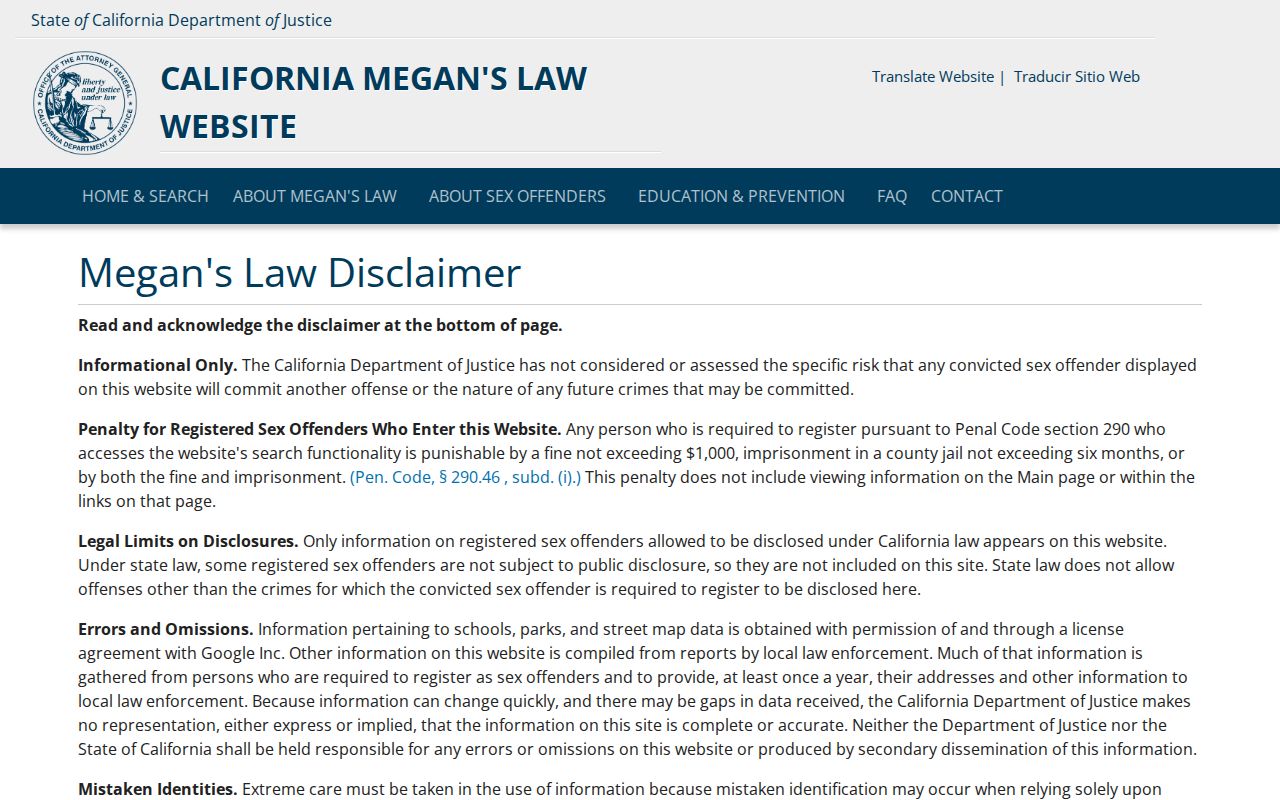
Some residents are deliberately hard to find in public sources. Safe at Home gives eligible participants a substitute address and mail forwarding. It cannot erase every older deed or historical directory. California Megan's Law carries statutory exclusions and use warnings. It does not display every registrant or address. County jail and state custody tools are snapshots. They are not proof of guilt or a current home.
The Megan's Law result draws from the California Department of Justice registry site. The LASD Inmate Information Center is a separate county-custody lookup. Neither is a residents directory.
State custody is a different system from county custody. The California Department of Corrections and Rehabilitation locator covers state custody only.
Lawful use. A Los Angeles County resident lookup serves personal, lawful research. It also supports family history, reconnecting, and civic understanding. Never use location or identity information to stalk, harass, threaten, intimidate, impersonate, or harm anyone.